Wednesday, August 21, 2013

Least Flycatcher Nest

One day in late June, I stopped on the side of a road to make some notes about birds I had just seen.  Movement in nearby trees caught my attention.  I noticed a miniscule nest built in the fork of a small tree.  What small bird made this?

I waited a few minutes and a Least Flycatcher flew in and settled down.


All About Birds nest description:  Neat open cup woven of bark strips, grass, caterpillar webs, lichens, hair, feathers, rootlets, mosses, and other bits of vegetation; lined with fine grasses, feathers, hair, down, and plant stems; placed in crotch or fork of small tree.

Fast forward a couple of weeks, I was again in the vicinity.  Madam Flycatcher was not on the nest.  I was about to get out of my car and have a closer peek at the nest when she flew in with some sort of insect...


...and up popped a tiny beak.

All About Birds Cool Fact:  One Least Flycatcher nest was found to have used dragonfly wings as nest lining.


I'd never seen a baby Least Flycatcher before.

An adult is about 5.25 inches/13 cm long.


I watched her make several forays; she was feeding at least two chicks.

 
It was another few weeks before I returned.  The nest was empty.  


I hope the little family thrived and are now making their way to a southern destination.

Another Cool Fact:  Unlike most species of songbird, adult Least Flycatchers migrate to their wintering grounds before molting, while young birds molt before and during autumn migration. Why such a pattern has developed remains unclear, but it may result from strong selection on adults for early arrival and establishment of territories on the wintering grounds.

Range Map of the Least Flycatcher


Information Source:
All About Birds 

Thursday, August 8, 2013

At The Sewage Lagoon

Our particular sewage lagoon complex is really stinky at this point in the summer, but it is a fabulous place to find birds.

Here are some of our resident Canada Geese (Branta canadensis), strolling down a trail.


There are Eared Grebes (Podiceps nigricollis) with babes everywhere.


Wait for me! 


And a good many of the elegant American Avocets (Recurvirostra americana)


xxxxxxxxxxx

Tuesday, August 6, 2013

Jr. Forster's & a Duck

The players:  A family of Forster's Terns (one adult and three juveniles) and a female Canvasback Duck.

The Setting:   A very peaceful afternoon at a prairie slough. 


The Story:  It is quiet.....quiet except for a very noisy, whiny Forster's Tern juvenile, very put out about having to feed itself.


Oh, it picked and pecked at things in the water,


...but mostly Junior begged and fussed.  The two other young terns slept with head tucked under wings.  Perhaps they were tuckered out from their own extended begging antics.


Young Tern:  "Feed me, Feed me, I Am Hungry"

Parent Tern, humming tunelessly to itself, patiently says:  "No darling, you must try to find your own food.

Duck: "Please be quiet.  I'm trying to enjoy the day"


YT:  "Can I have something to eat; give me something to eat, I'm starving, feed me"

PT:  "No, sweetheart, you must learn to feed yourself...see that nice piece of pond scum right there...it is so yummy....try it".

Duck, muttering not quite to itself:   "Give the kid something, anything"  (I am sure a loud duck sigh could be heard).


YT:  "I Need FOOD!!!  Why won't you feed me?"

PT, randomly to all in the area:  "Isn't he just so cute and clever?"

Duck, not seeing the adorableness of the young tern:   "I can't stand this anymore.  I'm outta here.  Honestly!".


Of course, it was me, loitering from a distance, that made the duck waddle off, but still, I like to blame it on the noisy young tern as that is usually my own reaction when my space has been invaded by whiny children.


Monday, August 5, 2013

Pronghorns

The Lady Pronghorns (Antilocapra americana)  with a couple yearlings


The vigilant Gentleman Pronghorn


Pronghorns live on the vast, wide-open prairies where there is little place to hide.  They have not bothered with camouflage colouring because they have excellent eyesight and can outrun most predators.  

They are the fastest mammal in North America, capable of attaining speeds of 40+ mph.  Fawns can outrun humans when just a few days old.

Pronghorns feed on whatever prairie vegetation is available, including many plants that are toxic to domestic cattle.

Information source:
Kaufamn Field Guide to Mammals of North America

Saturday, July 6, 2013

Kingfisher or Calvin

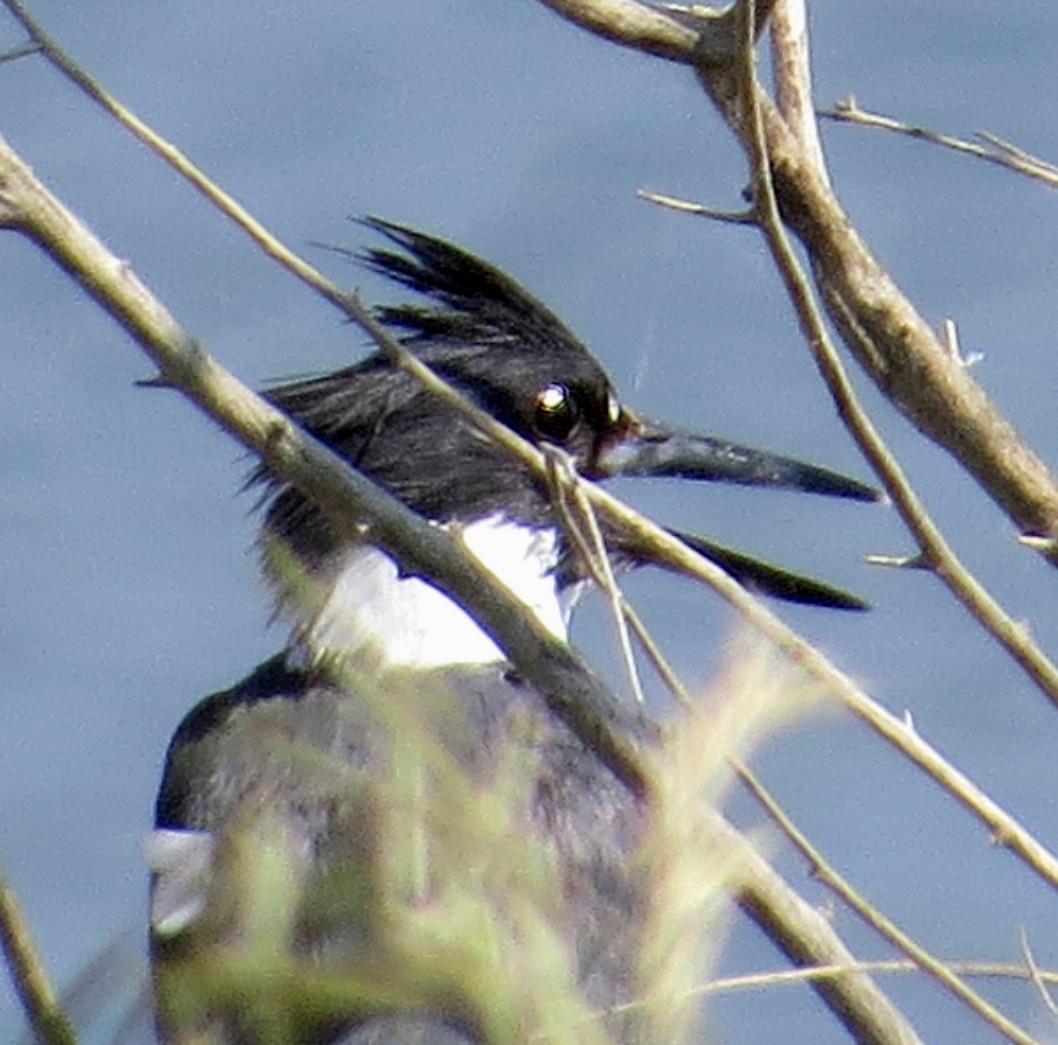
A Belted Kingfisher (Ceryle alcyon) panting after a dive on a hot summer day.  Now what does this remind me of?


Got it!  Calvin of Bill Watterson's very amusing comic strip, Calvin & Hobbes


Thursday, July 4, 2013

Out On The Prairie

I went for a long drive yesterday to my favourite place in Saskatchewan - the expanse of prairie ranch land in the The Big Muddy area.

It is about a 1 1/2 to 2 hour drive west from my current home.  


And a Dickcissel (Spiza americana) at Avonlea - a tad fuzzy but hey, best I could do at the time.


Sunday, June 30, 2013

A Most Peaceful Place

Is this a slice of heaven or what?


Opapiskaw Rapids


on the Winnipeg River near Lac du Bonnet, MB  (the locals say lac du bonny)


The river was higher than usual, so the rapids were fairly submerged.


Common Yarrow (Achillea millefolium


So very peaceful.


I think this is Alumroot (Heuchera richardsonii). 


Did I say it was a most peaceful, still evening....??? 

 
And what Canadian lake, river or stream is complete without our national animal Castor canadensis


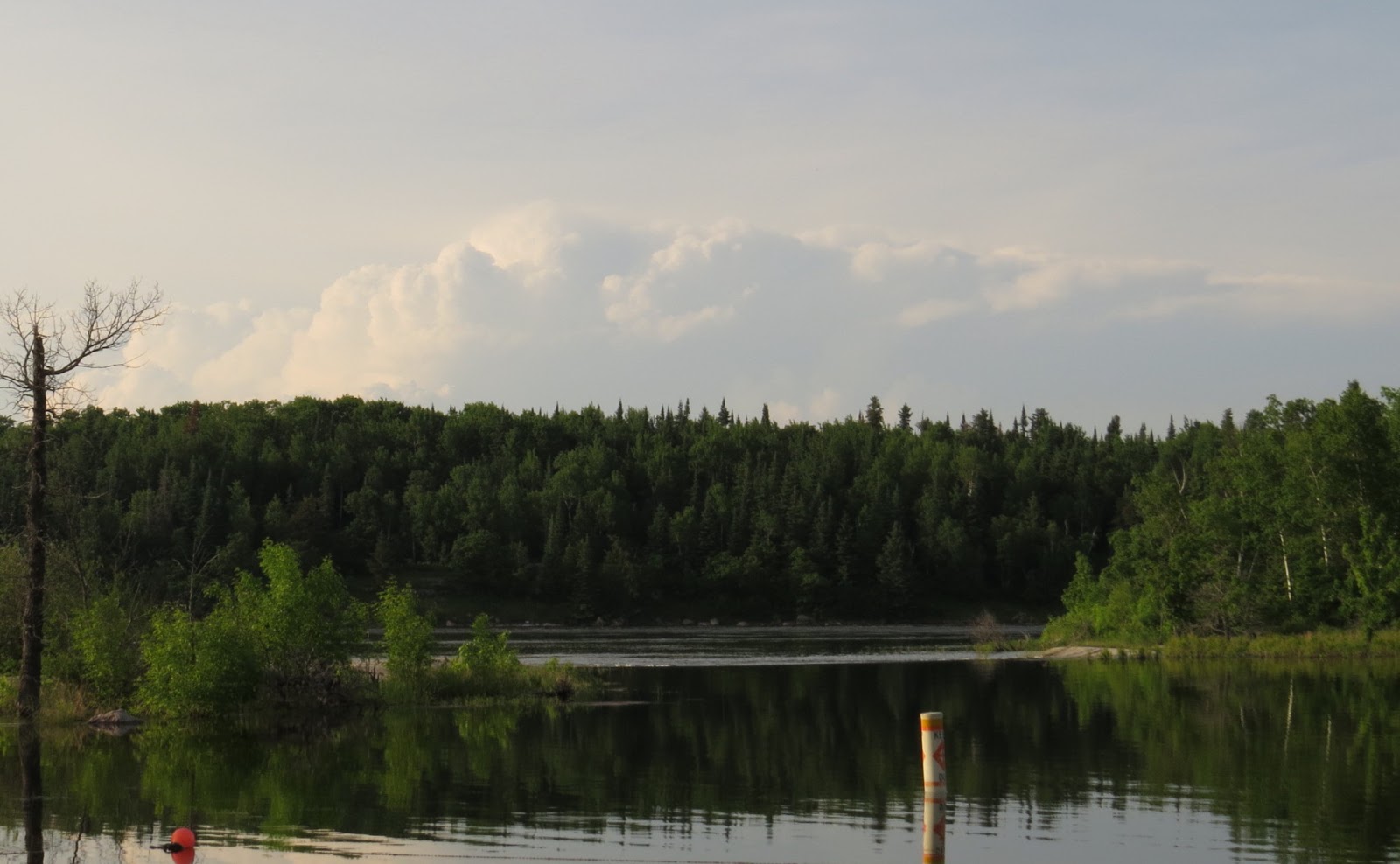
A storm advancing?  Yes, this is part of the storm system that caused flooding in Alberta, dumped a lot of rain over Southern Saskatchewan and Manitoba....with more to come.  But, I didn't know about all that.  I'd been in the woods for a few days, completely oblivious of what was going on in the rest of the world.  Switched off and tuned out.  So nice.


A Canadian Tiger Swallowtail (Papilio canadensis) also enjoying the simple and very natural life.


This particular bit of serenity was courtesy of Opapiskaw Campground in Manitoba's Whiteshell Provincial Park.


Thanks, Manitoba.  I'll be back.

Where is it?

Friday, June 21, 2013

At Falcon Lake

I'm in the Whiteshell Provincial Park in eastern Manitoba.  Yesterday we (my cat & I) fetched up at Falcon Lake for the night. 

The lake


The campground


There are always Ring-billed Gulls....(and Herring Gulls, too)


The marsh


And the campground deer - a semi-tame white-tail doe


I like it here.